

The Storytelling Effect: How Podcasts Became My Training Ground

Graham Brown
My first ever recorded interview was a disaster.
It was 2002 or 2003. I was sitting in front of a Skype call with a telephone-line microphone rig, talking to a guy who was working at Hewlett Packard at the time. The conversation was stiff. I had no idea how to hold a room. No sense of rhythm, no instinct for when to push into a story and when to let silence do the work. I was doing what most people do when they sit behind a microphone for the first time - I was performing, not connecting.
That guy went on to found Angry Birds.
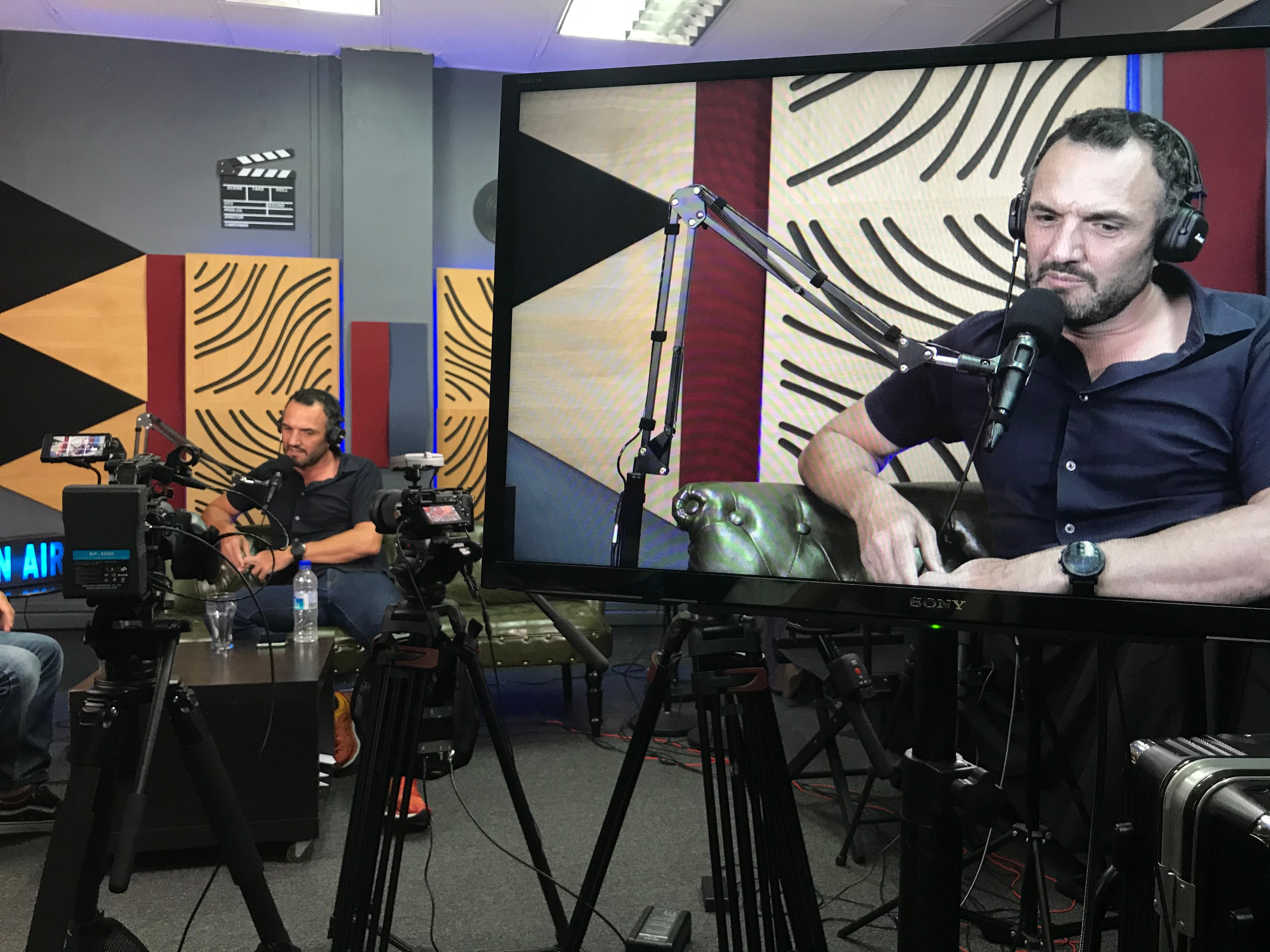
I went on to record another 2,000 episodes. And somewhere between that clunky first Skype call and now, something shifted. I stopped trying to sound credible and started learning how to tell stories that actually land. Not because someone taught me a formula. Because podcasts gave me a stage to practise on - over and over again, in front of real audiences, with real feedback.
That is the insight most people miss about storytelling. It is not a gift. It is a skill built through reps. And podcasts are the best training ground that exists for it.
Two numbers worth paying attention to
63% of people remember stories. Only 5% remember a single statistic. That is not a guess - it comes from research by Stanford professor Chip Heath, published in Made to Stick. The implication is hard to ignore: if your authority strategy is built on data, credentials, and slide decks, most of your audience is forgetting you before you finish talking.
B2B podcasts command 80%+ listener completion rates - compared to just 12% for video content. People do not just press play on podcasts. They stay. That kind of sustained attention is almost impossible to buy anywhere else.
I didn't start as a storyteller
The thread started long before podcasting.
As a child, I had an uncontrollable compulsion to understand how things worked. My parents hid the screwdrivers when they left me alone at five or six years old. I took everything apart. Cathode ray tube TVs. The back of every device. My dad's post-war radio from the greenhouse potting shed - took it apart, could not put it back together, but understood what was inside. My most treasured Christmas present was a book called How Things Work - literally just explanations of how everyday things functioned.
I was interested in taking things apart, not putting them back together.
That curiosity never left. It just changed shape. At the University of Sussex in 1994, I studied Artificial Intelligence - not the narrow machine-learning version of today, but a PPE-style breadth course spanning philosophy, epistemology, neuropsychology, and cognitive psychology. My thesis was on modelling robotic cockroaches. When I graduated, the careers office had no idea what to do with me. The only job on the list: go and teach English in Japan.
So I did. And Japan changed everything. I saw early mobile internet years before the West. I witnessed how technology reshapes communication at the human level - not in the boardroom, but in the streets. That led to a research company, then a youth mobile business that grew to serve Vodafone, Nokia, UNICEF, MTV, Disney, and eventually a presentation to the United Nations.
But here is the thing. For most of that career, I was leading with data. Reports. Frameworks. Market analysis. The information was solid. The delivery was dry.
It took podcasting to teach me that understanding how things work is only half the job. The other half is making people care. And caring is not triggered by data. It is triggered by story.
As Seth Godin puts it in All Marketers Tell Stories marketing is not about the stuff you make. It is about the stories you tell. The virtues of the product do not sell the product. If you do not package it in a story, nobody gets it - no matter how good the underlying thing is.
I learned that lesson the hard way, one podcast at a time.
Why data is dry and stories travel
Most professionals still lead with expertise. They open with credentials, cite research, and build logical arguments. It feels like the right approach. It is also, according to the psychology, the wrong sequence.
Neuroscientist Antonio Damasio found that patients with damage to the brain's emotional processing areas could not make even simple everyday decisions - despite having fully intact intelligence. Without the ability to attach emotional weight to options, they were paralysed. The implication is counterintuitive: removing emotion from decision-making does not make people more rational. It makes them unable to decide at all.
This is the core tension. Leaders communicate in the order they were trained: logic first, emotion second. But the brain receives information in the opposite order. Emotion answers the question "Do I care?" Logic answers the question "Can I justify this?"
Nobody gives a damn about your plan. Martin Luther King had a dream.
According to research reviewed in the Annual Review of Psychology emotions are "potent, pervasive" drivers of judgment and choice. The science is clear: facts inform, but stories move. Data tells people what happened. Story tells them why it matters.
Consider the contrast between Lakpa Sherpa and Bear Grylls. Lakpa has summited Everest nine times and holds world records. Bear Grylls has summited once. Lakpa earns less than $30,000 a year as a dishwasher. Grylls commands $30,000 per speaking engagement and has built a $20 million empire. The difference is not achievement. It is the ability to wrap experience in a story that resonates.
That gap between knowing something and making someone feel it - that is the gap most thought leaders, founders, and coaches are living in right now. They have the expertise. They have the credentials. What they do not have is a story architecture that makes any of it land.
Podcasts are the training ground
Here is what changed for me.
Around episode 100, I started noticing patterns. Certain stories got a reaction. Certain analogies made complex ideas click. Certain openings held attention, and others lost it within the first thirty seconds. The podcast was not just a distribution channel. It was a feedback loop.
This is the comedian analogy, and it is exact. No comedian was born funny. They bombed in dive bars in front of three drunk people. Every joke, every callback, every bit of timing was tested, refined, and retested in front of real audiences. Jerry Seinfeld still goes to small clubs to test new material. The stage is not where you perform your best stuff. It is where you build it.
Podcasts work the same way.
By episode 500, I had developed what I now think of as story modularity. Not a single rehearsed narrative, but a library of reusable components - origin stories, analogies, frameworks, scene-setting moments - that could be remixed and recombined depending on the audience, the host, and the conversation. The screwdriver kid story. The Japan mobile internet story. The Angry Birds first interview. The UN presentation. Each one tested across dozens of conversations until I knew exactly where it landed, where it stalled, and where it needed a different entry point.
That is something you cannot build by writing blog posts or recording solo content. You need the live conversation. You need the host's reactions. You need the unpredictable moment where a question takes you somewhere you did not plan - and you discover a new way to frame an idea that you have been carrying for years.
Podcasts reward long-form thinking in a way almost no other medium does. B2B podcasts achieve 80%+ episode completion rates - meaning people actually stay for the full conversation. Compare that to the 12% completion rate for video content. When someone gives you 45 minutes of uninterrupted attention, you have the space to build a narrative arc, not just deliver a soundbite.
This is what makes podcast guesting fundamentally different from other visibility strategies. It is not acquisition. It is influence. You are not pitching. You are demonstrating how you think in real time - and the audience arrives at their own conclusion about whether you are credible, interesting, and worth following.
Every appearance becomes a recorded demonstration of judgment. Over time, those conversations become a searchable, shareable portfolio of intellectual authority. Not because you claimed expertise. Because you showed it, conversation by conversation, story by story.
Key lessons from 1,000+ podcast appearances
Lesson 1 - Storytelling is a skill, not a gift. The only way to get good at it is reps. Podcasts provide the stage, the audience, and the real-time feedback loop. Nothing else comes close.
Lesson 2 - Story modularity beats rehearsed narratives. Build a library of reusable story components - origin scenes, frameworks, analogies - and learn to remix them for different audiences and contexts.
Lesson 3 - Data informs. Story moves. The research is consistent: people remember narratives, not statistics. Lead with the story. Let the data support it, not the other way around.
Lesson 4 - Long-form is the advantage. Short-form content builds awareness. Long-form builds belief. Podcasts give you the space to demonstrate judgment, not just deliver a message.
Lesson 5 - Every conversation compounds. A single episode is useful. A body of 20, 50, or 100 conversations becomes a durable authority asset that keeps working long after you recorded it.
The real opportunity
Most people treat storytelling as a nice-to-have. A presentation skill. A soft overlay on top of the real work.
It is not. Storytelling is the mechanism through which trust, authority, and influence actually travel. The research on narrative transportation, neural coupling, and emotional decision-making all point in the same direction: if you cannot tell a story, you cannot move people. And if you cannot move people, your expertise stays trapped inside your own head.
The opportunity is not to become a content creator. It is to become a better communicator - and to use podcasts as the training ground where that happens.
I did not plan to become a storyteller. I planned to study AI and take things apart. But 2,000 episodes later, the thread is the same one it always was: understanding how things work. TVs, brains, communication, influence. The curiosity that made my parents hide the screwdrivers is the same curiosity that keeps me behind a microphone. The only difference is that now, instead of taking things apart, I am learning how to put them back together - in a way that makes someone else see what I see.
That is the storytelling effect. And podcasts are where you learn it.
If you want to see what this looks like in practice for someone building authority through podcast guesting, explore the journey of executive coach and author Nick Jonsson in our case study. It is the same principle at work: long-form conversations that keep ideas in circulation, build a public speaking portfolio, and create credibility through substance rather than promotion.
